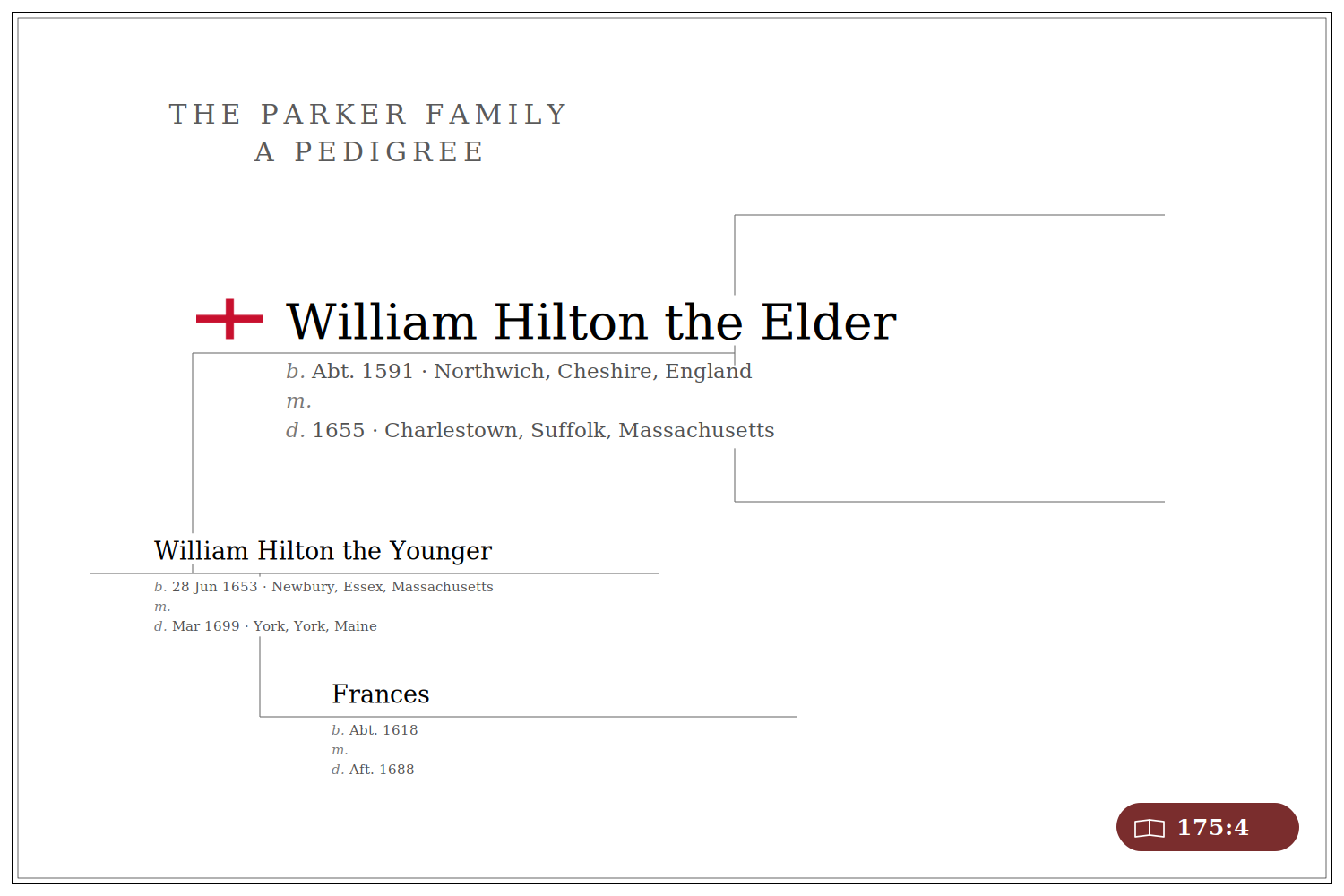
William Hilton came to America in 1621, on the second ship to Plymouth.
Never heard about Plymouth’s second ship? You’re not alone — almost nobody has, and once you know what happened, you’ll understand why.
The ship was called the Fortune, which is the kind of name you give a ship before anything has gone wrong yet.
It arrived a year late. The Mayflower landed in 1620, but the Fortune didn’t drop anchor off Cape Cod until 9 November 1621, missing, by weeks, the harvest feast that would eventually get rebranded as the first Thanksgiving.
It was smaller. Much smaller. About a third the size of the Mayflower, and it carried roughly thirty-five new colonists, mostly young single men, into a settlement that had buried half its people the previous winter.
And here is the part that tells you everything about the men who financed the voyage: they sent thirty-five new mouths and no food. None. Governor Bradford, who was not a man given to comedy, sat down and recorded for posterity that there was “not so much as a biscuit-cake” for the new arrivals, no bedding beyond “some sorry things” in their cabins, and “nor pot, nor pan, to dress meat in.” The ship hadn’t even been provisioned to feed its own crew on the trip home.
Plymouth did the math, put everyone on half rations, and worked out that the corn would last about six months if nobody got greedy. The colony’s reward for surviving its first year was thirty-five strangers and a hunger problem.
That could be considered the best outcome. It nearly went worse.
The Fortune loitered around the tip of the Cape long enough that the colonists decided it was a French raider come to murder them, and Bradford convened a council of war. Myles Standish — the colony’s tiny, perpetually furious military officer — mustered every man and boy who could hold a gun and had the cannon up on Fort Hill fire a warning shot. The ship then ran up the red cross of England, everyone exhaled, and Plymouth narrowly avoided opening fire on the reinforcements it had spent a year praying for.
The Fortune’s fortune didn’t get much better. While in port, the colonists spent two weeks cramming the hold with everything that might pay down their debt to their English investors — beaver and otter pelts, sassafras, split-oak clapboard. Somewhere around £500 of goods were packed in the ship for the trip back, enough to cut what they owed in half. The ship sailed for London on 13 December 1621 carrying the first real value the colony had ever produced.
It never got there.
A navigation error put the Fortune on the coast of France instead of in the English Channel, where a French warship took it on 19 January 1622, held everyone aboard for about a month, and helped itself to the Fortune’s entire cargo.
The ship limped into London in February with an empty hold. The financier who’d sent it lost his whole investment, the colony’s first paycheck went to a French privateer, and the Fortune sailed out of history the way it had sailed into it — broke, late, and badly handled.
Remember, this was the ship my great-grandfather William Hilton (~1591–1656) chose.
Not a ton is known about what Hilton did, individually, but it doesn’t look like he stuck around to enjoy Plymouth for very long.
He was still there in 1624 when the Reverend John Lyford baptized a child against the wishes of the Separatists running the colony — the church fight that got Lyford run out of town.
Not long after, Hilton packed up and left for the salt works at Little Harbor, up on the Piscataqua. Salt-making, as it happens, had been the chief trade of Northwich, the town he’d come from back in England.
He’d crossed an ocean, picked the worst possible ship, landed in a colony that couldn’t feed him, sat through its first religious schism, and then gone right back to making salt.
Now, personally, I’m batting .000 as far as Mayflower goes, at least for now. But maybe the Fortune is the better inheritance anyway.
The Mayflower is the story we tell — the brave little band, the rock, the pageant. The Fortune is how it actually went. You arrived late, with the wrong supplies, to a place that isn’t ready for you, and the one good thing you manage gets taken by pirates on the way home.
Maybe that’s not the founding myth, but that is immigration for most of us.
Sources. The arrival of the Fortune (Cape Cod, 9 November 1621), the missing provisions, and the Lyford baptism dispute of 1624 are from William Bradford’s Of Plymouth Plantation; the £450–500 cargo and the French seizure of January 1622 are likewise from Bradford and the early Plymouth records. William Hilton’s place on the ship rests on the 1623 Division of Land (Plymouth Colony Records 12:5); his Northwich origin, his arrival on the Fortune, and his removal to the Piscataqua salt works are from the Genealogical Dictionary of Maine and New Hampshire (Noyes, Libby & Davis), under HILTON.
Podcast: Play in new window | Download