Podcast: Play in new window | Download
I started doing genealogy on 14 November 2018 (which I can tell only because that’s the beginning of my shockingly expensive Ancestry.com subscription) but I had the cheat code all along…
The big box of Nana Macdonald’s genealogy papers. Which I didn’t open until this past month.
Part of that gap was logistics — I began on my father’s side, and there’s obviously nothing in the box for that line. So, for a long stretch Nana’s papers had nothing to tell me.
But mostly it was on purpose. I wanted to make all my own mistakes first. Run down my own dead ends, misread my own records, learn the difference between a fact and a hope — before I asked my grandmother to bail me out. Starting with her answers felt like cheating when I hadn’t earned my own questions yet.
What finally got me to open it was a wall. I’d hit one. With John George MacDonald.
John George is a (beloved, I’m sure) ancestor a few generations up the MacDonald side — my great-great-grandfather, which makes him Nana’s grandfather. And I got stuck trying to figure out who was his father. For weeks I couldn’t get past him.
Every record I pulled either pointed somewhere unprovable or didn’t point anywhere at all. Heck, John George barely existed at all in the genealogical records landscape, so his father was necessarily a bridge or two too far.
So I opened up the box, looking for a way around him.
And somewhere in the middle of all those letters and worksheets, it landed: she’d hit a wall too. Same spot. Same man.
John @#$@#ing George.
Decades before me, with index cards and postage instead of databases, my grandmother had walked up to the exact same blank wall I was standing at, put her hand on it, and not gotten through either.
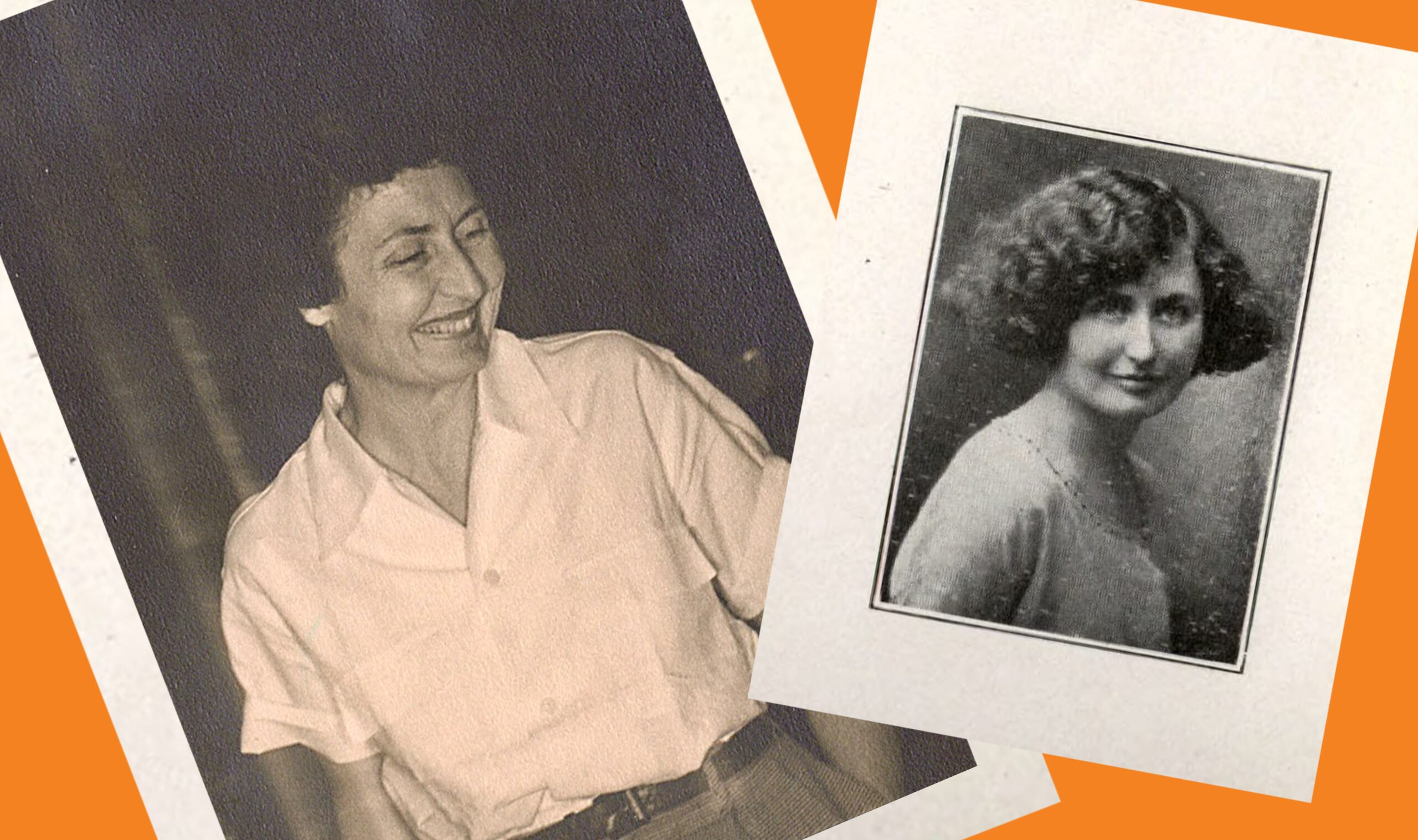
My grandmother — Marion, though the family called her Mike and I called her Nana — was not a casual hobbyist. Over a quarter-century, roughly 1964 to 1990, she filled a box with letters, worksheets, pedigree charts, and replies from archives and museums and clan societies, all of it done the slow way, most of it by mail. (My mother remembers it running back to the 1950s — trips to Massachusetts, comparing notes at each family gathering a good decade before the box’s oldest letter.)
She wrote to the public archives of Nova Scotia and the vital statistics office on Prince Edward Island. She wrote to Scottish clan societies, to a Catholic college, to cousins she’d tracked down and cousins she was still trying to. She bought books and microfilm. She filled out family group sheets and then filled them out again when a new letter came back and changed something.
She didn’t only write letters. She walked churchyards copying down tombstones, and made the occasional hopeful pilgrimage to a town clerk’s office only to be told the records she wanted had burned in a courthouse fire sometime in the 1800s. She and her eldest brother made those trips together — the two genealogy obsessives in the family, to the patient amusement of everyone else.
This was research with a six-week round-trip latency: write the question, mail it, wait, see what the answer breaks. Hope the letter doesn’t get lost or ignored.
In the past month, I’ve digitized four hundred and fourteen pages of Nana’s genealogy papers so far, and I’m barely halfway through. (There are still five folders of Preble and Haskell records in the box I haven’t touched.)
Whatever the final number is, it’s a lot of paper for one woman with a fountain pen and a stamp drawer.
If you spread the pile out, the first impression is mess. One sheet will have a name spelled three ways. Another will have four father candidates for the same ancestor, two of them crossed out. Margins full of question marks. Drafts of the same letter, slightly different each time.
On the surface, and with barely a date on any of the records to show the passage of her time, it looks like she was someone who couldn’t make up her mind.
But after months of digging, it turns out every crossed-out name is a lead she ran down and rejected. Every competing draft is a hypothesis she was holding open against a reply she hadn’t gotten yet. Pre-internet genealogy didn’t have a search box that returns ten answers in half a second. It had postage and patience, and you kept several possibilities alive at once because you had to wait weeks to rule any of them out.
So I’m not here to grade Nana against Ancestry.com. Instead, I decided to lean into reconstructing how she thought — what she’d nailed down, what she was still chasing, and why.
The families run in a few directions.
On one side, the MacDonalds and McEacherns out of Prince Edward Island and Nova Scotia, traced back across emigrant ships to Scotland — to Glencoe, by family tradition, and to a Catholic bishop that wasn’t exactly widely discussed. (Nana pulled me aside one day, and looked at me like she was worried someone would find out, when she said to me “I think we have Catholics in our family.”) On the other, the Prebles and Haskells, with their own deep New England roots.
There are Scottish clan timelines and charts. There are book invoices. There are cousins writing in from Pictou and Charlottetown with pieces of the puzzle, and at least one relative doing her own legwork in PEI cemeteries on Nana’s behalf.
Here’s the part that gives the whole thing some weight. I never recorded or wrote down her stories, or saw a completed family tree, or asked her a question about her father or her grandfather.
And the joke, if it is a joke, is that I finally opened the box to ask Nana for help and found her standing at the same wall I was, just as stuck, fifty years early. So now it’s the two of us stuck.
I’m just the one who got here last.
So that — *gestures wildly at everything* — is the plan, and why I’ve started blogging again. I chose an archaic channel to post the results from an archaic hobby, built on 50+ year old documents stored in rooms without windows (or boxes stuck on closet shelves that haven’t seen the light of day once in the last 11 years).
A couple of times a week, as I work through the tree, I’ll post the story behind whatever human puzzle I’m trying to solve at the moment. From my Nana’s side, and from my father’s side (the Tituses … Titusi? … and the Parkers) too. Maybe even a photo or two if I can find them.
So far, I’ve found a steady stream of people who deserve more than a line on a chart.
And maybe I watched too many animated movies about the day of the dead (thank you, Book of Life) but it makes me happy thinking that these people are in the happy side of the afterlife because some random old white dude is running through his Nana’s box of genealogy notes.
God knows what I’ll put up and when, but that’s why I wanted to put this post up first. Now you know whose handwriting you’re looking at, and why I am desperately trying to read said handwriting.
More soon.