Tag: Scotland

  • Free of Wound

    Free of Wound

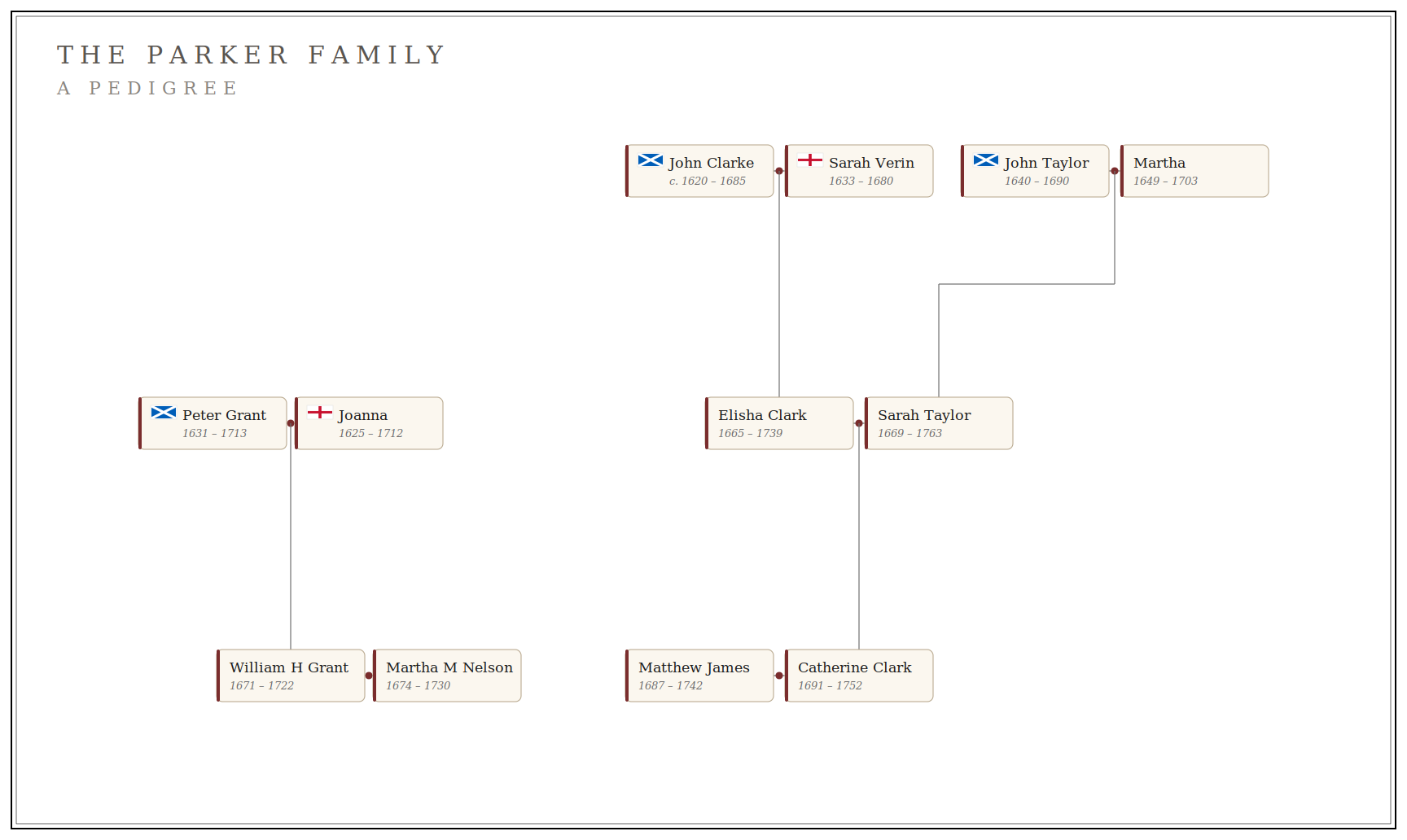
    Three of my great-nth-grandfathers — Peter Grant, John Clark, and John Taylor — crossed the Atlantic on the same ship, and not one of them chose to be on it.

    The ship was the Unity. It sailed from London in November of 1650 carrying a hundred and fifty Scottish prisoners of war, each under a seven-year sentence of labor, sold by the pound to a failing iron works outside Boston.

    To explain the prisoners, I should explain the war.

    Oliver Cromwell was a Puritan general who fought and won the English Civil War, beheading King Charles I in 1649, and abolishing the monarchy. His revolution made England a republic, with him at its head. He is the patron saint of “we killed the tyrant and managed to replace them with something worse.”

    When the dead king’s son inconveniently turned up in Scotland, the Scots raised him an army — out of a desire to both systematically piss off England and plant a Stuart on the throne who’d turn Scotland Presbyterian.

    Cromwell, never being much for competition, marched north to end the threat before it could come south. He found Charles II’s army at Dunbar, but managed to get himself pinned against the sea, with his army sick and starving, and a larger Scottish force on the high ground above.

    Then the Kirk’s ministers — who’d already purged the army of every officer they judged insufficiently godly — decided something like, “we need pious men more than competent ones,” and “who needs the high ground?”, and marched the Scots down off the hill, over General Leslie’s objections, to be routed by Cromwell’s veterans inside of an hour.

    Trust the Scots to snatch defeat from the jaws of victory.

    A few thousand Scots were taken prisoner and marched south — roughly a hundred miles, on foot, with no food. The jailer’s own letters record it: men who fell behind were shot, and the starving prisoners penned overnight in a walled garden dug up raw cabbages and ate them whole, mud and roots, which only killed them faster.

    They were held in Durham Cathedral, where dysentery and cold took some seventeen hundred more.

    (If that number feels abstract, it stopped being abstract in 2013, when a construction crew digging behind Durham Cathedral for a new café cut straight into a mass grave. The bones were the Dunbar prisoners — tipped in without ceremony, exactly where they’d died. It took until 2018 to rebury them properly.)

    The prisoners of war were, to the Cromwell regime, an asset that shouldn’t be wasted by slowly killing them in jail, and found themselves a London proto-capitalist named John Becx who owned a failing iron works at Saugus, north of Boston, that needed cheap hands.

    Becx bought himself a crop of unwilling Scottish prisoners, a hundred and fifty of the soundest, who were selected on the explicit standard of being “well and sound and free of wound.”

    He loaded them into the hold of the Unity and shipped across the winter Atlantic. Roughly one in ten died on the crossing. When the hold finally opened for good, three of my great-granddads climbed out of it.

    Peter Grant (1631–1713)

    Peter Grant was nineteen at Dunbar. He went first to the iron works at Saugus. It failed more or less continuously (it’s now a national historic site, which is what we do with businesses that lose money for a living) and he was sent north to the sawmills on the Piscataqua.

    He served out his time and then bought fifty acres of his own. The deed survives, and it names him “Peter Grant, Scotsman,” which in colonial Maine was half identification and half raised eyebrow. He’d come over with his brother James, also a prisoner on the Unity; and when James died, Peter married his widow, Joan, and kept the family on its land.

    John Taylor (1640–1690)

    John Taylor came off the Unity in the group sent up to the Great Works sawmill in what’s now South Berwick — about twenty-five Scots set to cutting the giant white pines the British navy wanted for masts. He served his indenture, took his fifty acres, and then the former prisoner — a man shipped here in irons by an English court — got himself appointed constable. And grand juror.

    But, he was not particularly solemn about it. In 1669, the York County Court formally admonished Taylor, along with a knot of his fellow Scots, for saying “the divell” too freely in everyday talk. You survive Dunbar, the march, the cathedral, the ocean, and seven years of bondage, and the colony’s official grievance against you is that you curse too much. His 1687 will left thirty acres to each of his five daughters, so he died with a good deal more land than he started with.

    John Clark (1620–1685)

    John Clark’s thread runs through his wife, and she gets the best entrance of the three anyway.

    In 1652 the Essex County court fined a young woman named Sarah Verin for the crime of wearing a silk hood. This was an actual offense: Massachusetts kept sumptuary laws reserving fine dress for the right rank of people, and someone had looked at the stepdaughter of an iron-works carpenter, decided she was dressing above her station, and reported her.

    Sarah, fined for the hood, married a Dunbar Scot bonded at the very iron works where her stepfather worked. Whether she meant anything by it, the record doesn’t say.

    Scots’ Charitable Society

    Then the part that warms my cold, jaded, progressive heart:

    In January of 1657, in Boston, twenty-eight Scotsmen signed a short plain agreement to keep a common box of money “for the releefe of our selves being Scottishmen or for any of the Scottish nation whome we may see cause to helpe.” Their indentures were just then running out — newly free, and immediately organizing to feed and bury one another, because nobody else would.

    That box is now the Scots’ Charitable Society, the oldest charitable organization in the Western Hemisphere. Three hundred and sixty-nine years later it still meets, and still gives money away.

    On the founding roster of twenty-eight names are Peter Grant, his brother James, and a John Clark, whom I’ve drawn the obvious conclusion is none other than my own great-nth-grandfather.

    I love the poetry of it. Men who had been sold off a dock a few years earlier put their names to the oldest charity on the continent.

    And one more line in the records closes the circle. Taylor’s daughter Sarah married Clark’s son Elisha. Two of these prisoners — off the same ship, scattered to different mills on the same river — became grandparents to the same children.

    It can’t have been an accident. The Scots that Cromwell flung across an ocean found each other on the Piscataqua and did the most durable thing a scattered people can do: they married their children to one another, deliberately, until “the Dunbar men” stopped being a cargo manifest and turned into a town.

    There are places on that coast — a Berwick, a Scotland parish in York — that exist because the plan to disappear these men failed.

    They were shipped over as the end of something — a defeated army, sold and scattered and entered in the books as property and labor and “Scotchmen.”

    Within seven years they had a charity. Within a generation, a neighborhood. Within ten generations, me — putting their names back into the world one generation at a time.

    Which is the one thing the people who loaded the Unity were trying to make sure they would never ever do.

    Sources. The Battle of Dunbar (3 September 1650), the forced march to Durham, and the 2013–2018 Durham Cathedral mass-grave excavation and reburial. The ship Unity — sailed November 1650 with ~150 prisoners consigned by John Becx to the Saugus Iron Works, selected as “well and sound and free of wound,” and the distribution of its men to Saugus and the Maine sawmills — from Saugus Iron Works records and the Scottish Prisoners of War Society. The Scots’ Charitable Society founding agreement of 6 January 1657 and its roster of twenty-eight names. York County, Maine deeds and probate — the “Peter Grant, Scotsman” deed, Grant’s marriage to Joan, Taylor’s constableship, the 1669 admonishment, and his 1687 will. Essex County, Massachusetts Quarterly Court records — the 1652 fine of Sarah Verin. Stackpole’s Old Kittery and the Genealogical Dictionary of Maine and New Hampshire for the Grant, Taylor, and Clark families.

  • The Wrong Scot

    The Wrong Scot

    For about a week, Ancestry.com was confident I was from New Jersey.

    It had me descending from a woman born in Marlton – which I assumed was in Scotland, but a quick consult of the altas turned out to be a city in New Jersey, fifteen miles from Philadelphia, named after marl, a green clay full of crushed shell that local farmers spread on their fields as fertilizer. 

    There is no Marlton in Scotland. There never was. The whole thing arrived in my tree the way these things always arrive: a bum merge, somebody else’s bad data welded onto mine by a hint I should not have accepted, quietly relocating a genuine Scottish ancestor to a Philadelphia suburb named after dirt enhancer.

    It’s even funnier once you know I’d spent my whole life certain that it was being a MacDonald that made me Scottish.

    My grandmother was Marion Louise MacDonald — Nana — and honestly her name did most of the work. You hear MacDonald and you picture heather and a tartan and somebody being treacherous to somebody else at a dinner party in 1692. I never questioned it. Of course I was Scottish. Look at the name.

    But the MacDonalds had not been in Scotland for a long time. Donald MacDonald came across on the Hector — the ship that dumped a couple hundred Highlanders at Pictou, Nova Scotia, in 1773, three years before there was a United States. 

    By the time anyone in my family was alive to tell me I was Scottish, the MacDonalds had been Canadian for well over a century. John @#$@#ing George MacDonald — my great-great-grandfather, the brick wall, the man Nana spent twenty years of her life trying desperately to trace past — was born in Nova Scotia and died in Nova Scotia.

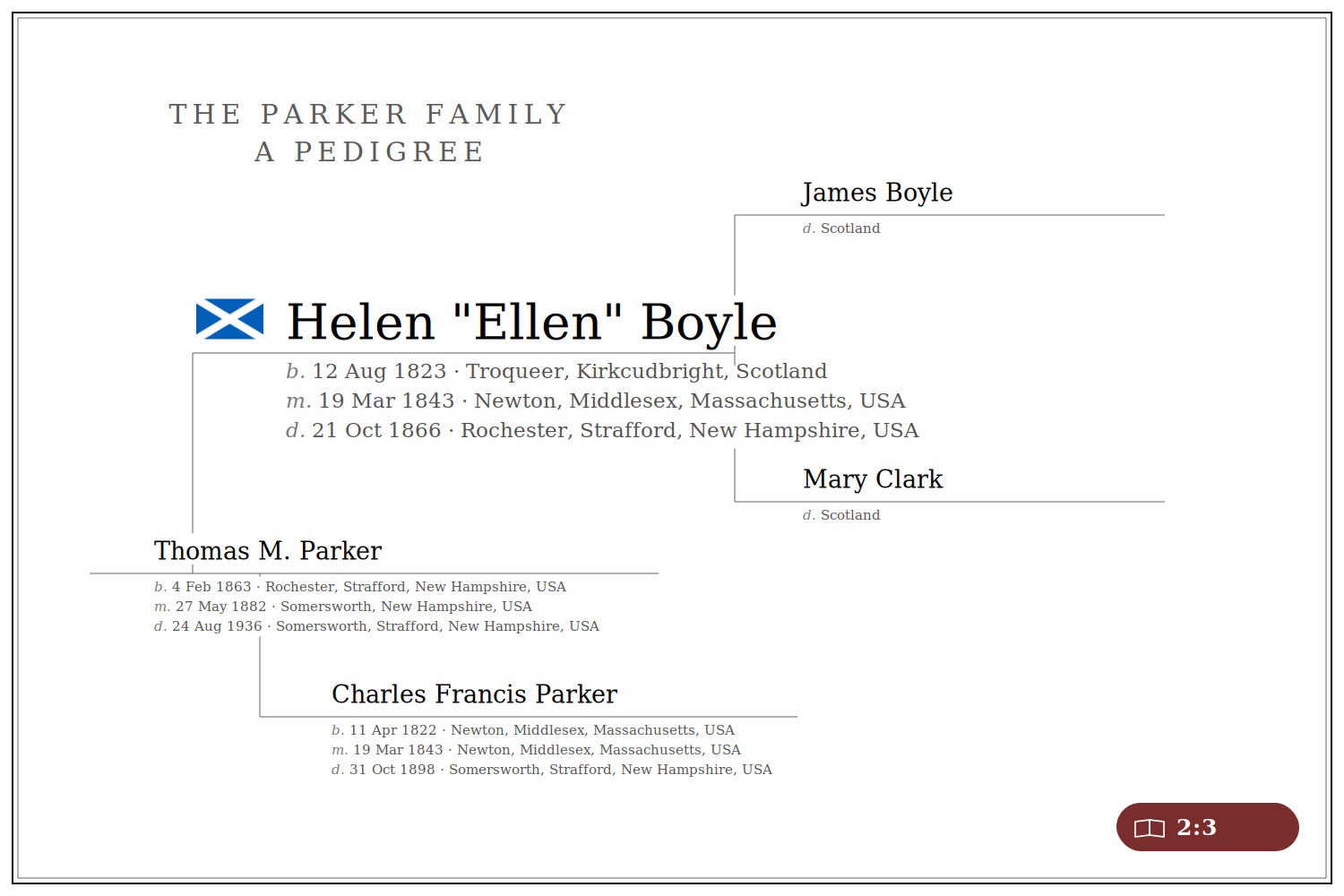
    So when Helen “Ellen” Boyle (1823-1866) was actually on a boat, leaving actual Scotland, John George was technically a seven-year-old Canadian. My Scottish grandmother’s people had left Scotland three generations before my supposedly-not-Scottish grandfather’s people got off the boat.

    Ellen Boyle is on the Parker side. The side with the flat, unbothered English name that nobody ever accused of being from anywhere. 

    Nonetheless, she was baptized in 1823 in Troqueer, Scotland — a parish on the west bank of the River Nith, just south of Dumfries, in the old stewartry of Kirkcudbright. That’s Galloway, the bottom-left corner of Scotland, the part that never makes it onto the shortbread tin. 

    Through her childhood, Ellen’s family moved between three Galloway parishes — Creetown out on the granite coast, Troqueer, and Kirkpatrick Irongray inland — the itinerary of people chasing work that keeps not lasting. Her father James did a stretch in the Kirkcudbright tolbooth, the town jail, which in that time and place held one main category of guest: men who owed money. (I looked for something more dramatic. There isn’t any.) He died in Scotland. So did her mother, Mary.

    Galloway in the 1830s and ’40s was a place you left. The handloom weavers who’d anchored the local economy were being ground out by the power looms in the cities. Wages collapsed. When Parliament studied the misery, one of the remedies its experts formally recommended was that the weavers simply emigrate. 

    The government’s official advice was leave. 

    Two of the Boyle children didn’t look back. Ellen sailed to Massachusetts and married Charles Francis Parker in Newton in 1843 — a Yankee, born there in 1822, no Scotland anywhere in him. Ellen’s brother went to a mill town up in Strafford County, New Hampshire, married a local woman, and dissolved into rural manufacturing without a ripple. The parents stayed, and died, and that was the end of the Boyles being from anywhere.

    It worked because Ellen was built to vanish. Lowland Scots came with the full assimilation kit — Presbyterian, English-speaking, literate — and dropped into Protestant Yankee New England like they’d been ordered from a catalog. 

    She married her Yankee Parker in Newton, and then the couple drifted north to Rochester, New Hampshire — the same Strafford County mill country her brother had landed in.  Both Boyles who got out ended up in the same corner of the same state. And, within one generation Galloway was simply gone: the tolbooth gone, the three parishes gone, the granite coast gone.

    So here’s the full stack, and I’d like a moment to appreciate it. The branch where diversity meant being born 10 minutes, 20 minutes, or 60 minutes outside of Boston brought me the ancestor with the most recent claim on global citizenship.  

    She grew up there, left there, crossed an ocean to get out — was sitting quietly on the branch with the boring English name. And when I finally went looking for her, the machine briefly and confidently informed me she’d been born in New Jersey.

    In a town named after fertilizer.

    I think she’d take it as a compliment. Vanishing was the whole idea, and turns out she was very good at it.

    Sources. Scottish parish registers — Troqueer and the Galloway parishes (Kirkmabreck/Creetown, Kirkpatrick-Irongray), Kirkcudbrightshire. Newton, Massachusetts vital records — the Boyle–Parker marriage, 1843. Find A Grave — Ellen’s death at Rochester, New Hampshire, 1866, the record that fixes Thomas M. Parker as her son rather than Charles’s second wife’s. Kirkcudbright burgh court records — James Boyle’s imprisonment.

  • Nana’s Papers

    Nana’s Papers

    I started doing genealogy on 14 November 2018 (which I can tell only because that’s the beginning of my shockingly expensive Ancestry.com subscription) but I had the cheat code all along…

    The big box of Nana Macdonald’s genealogy papers. Which I didn’t open until this past month.

    Part of that gap was logistics — I began on my father’s side, and there’s obviously nothing in the box for that line. So, for a long stretch Nana’s papers had nothing to tell me.

    But mostly it was on purpose. I wanted to make all my own mistakes first. Run down my own dead ends, misread my own records, learn the difference between a fact and a hope — before I asked my grandmother to bail me out. Starting with her answers felt like cheating when I hadn’t earned my own questions yet.

    What finally got me to open it was a wall. I’d hit one. With John George MacDonald.

    John George is a (beloved, I’m sure) ancestor a few generations up the MacDonald side — my great-great-grandfather, which makes him Nana’s grandfather. And I got stuck trying to figure out who was his father. For weeks I couldn’t get past him.

    Every record I pulled either pointed somewhere unprovable or didn’t point anywhere at all. Heck, John George barely existed at all in the genealogical records landscape, so his father was necessarily a bridge or two too far.

    So I opened up the box, looking for a way around him.

    And somewhere in the middle of all those letters and worksheets, it landed: she’d hit a wall too. Same spot. Same man.

    John @#$@#ing George.

    Decades before me, with index cards and postage instead of databases, my grandmother had walked up to the exact same blank wall I was standing at, put her hand on it, and not gotten through either.

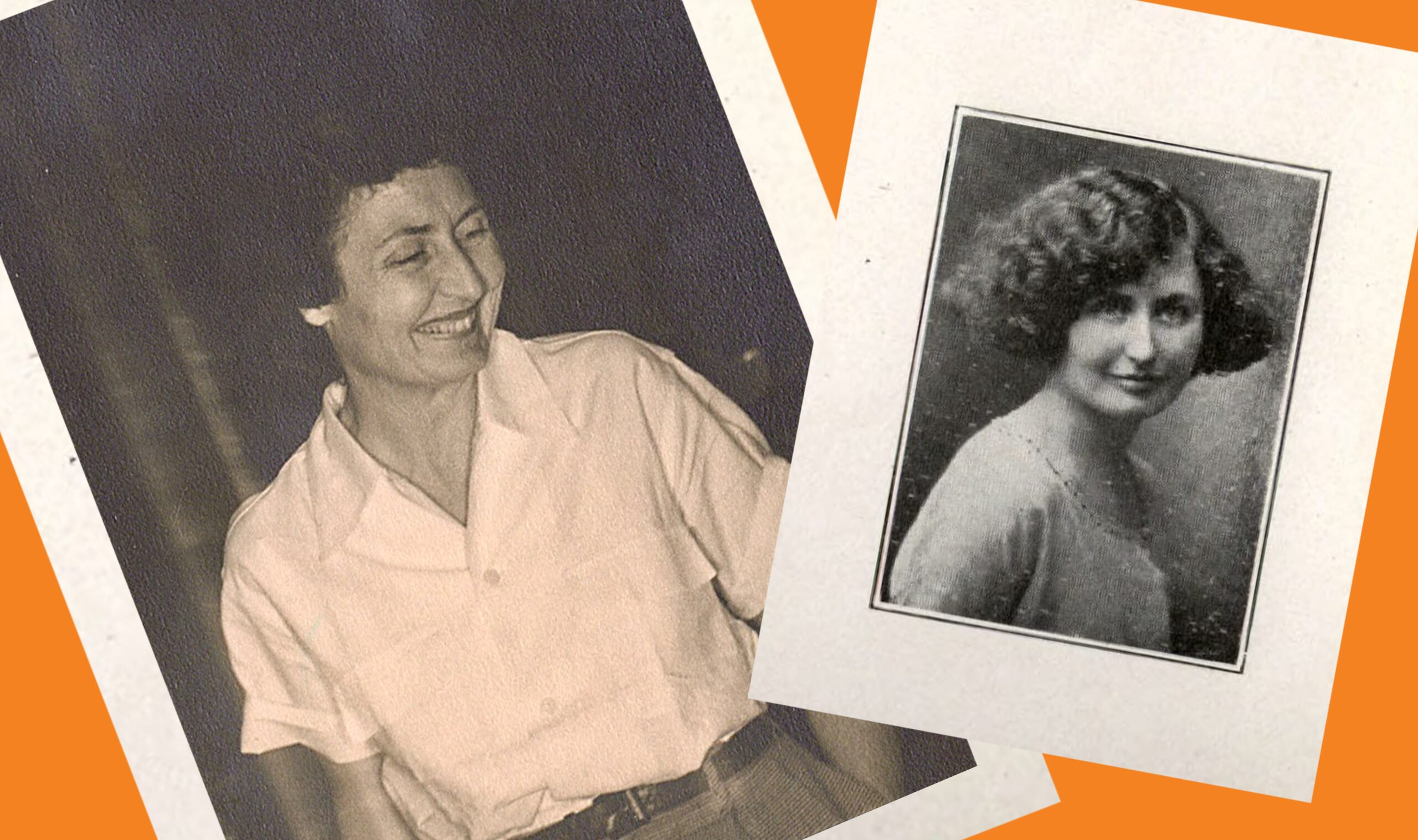
    My grandmother — Marion, though the family called her Mike and I called her Nana — was not a casual hobbyist. Over a quarter-century, roughly 1964 to 1990, she filled a box with letters, worksheets, pedigree charts, and replies from archives and museums and clan societies, all of it done the slow way, most of it by mail. (My mother remembers it running back to the 1950s — trips to Massachusetts, comparing notes at each family gathering a good decade before the box’s oldest letter.)

    She wrote to the public archives of Nova Scotia and the vital statistics office on Prince Edward Island. She wrote to Scottish clan societies, to a Catholic college, to cousins she’d tracked down and cousins she was still trying to. She bought books and microfilm. She filled out family group sheets and then filled them out again when a new letter came back and changed something.

    She didn’t only write letters. She walked churchyards copying down tombstones, and made the occasional hopeful pilgrimage to a town clerk’s office only to be told the records she wanted had burned in a courthouse fire sometime in the 1800s. She and her eldest brother made those trips together — the two genealogy obsessives in the family, to the patient amusement of everyone else.

    This was research with a six-week round-trip latency: write the question, mail it, wait, see what the answer breaks. Hope the letter doesn’t get lost or ignored.

    In the past month, I’ve digitized four hundred and fourteen pages of Nana’s genealogy papers so far, and I’m barely halfway through. (There are still five folders of Preble and Haskell records in the box I haven’t touched.)

    Whatever the final number is, it’s a lot of paper for one woman with a fountain pen and a stamp drawer.

    If you spread the pile out, the first impression is mess. One sheet will have a name spelled three ways. Another will have four father candidates for the same ancestor, two of them crossed out. Margins full of question marks. Drafts of the same letter, slightly different each time.

    On the surface, and with barely a date on any of the records to show the passage of her time, it looks like she was someone who couldn’t make up her mind.

    But after months of digging, it turns out every crossed-out name is a lead she ran down and rejected. Every competing draft is a hypothesis she was holding open against a reply she hadn’t gotten yet. Pre-internet genealogy didn’t have a search box that returns ten answers in half a second. It had postage and patience, and you kept several possibilities alive at once because you had to wait weeks to rule any of them out.

    So I’m not here to grade Nana against Ancestry.com. Instead, I decided to lean into reconstructing how she thought — what she’d nailed down, what she was still chasing, and why.

    The families run in a few directions.

    On one side, the MacDonalds and McEacherns out of Prince Edward Island and Nova Scotia, traced back across emigrant ships to Scotland — to Glencoe, by family tradition, and to a Catholic bishop that wasn’t exactly widely discussed. (Nana pulled me aside one day, and looked at me like she was worried someone would find out, when she said to me “I think we have Catholics in our family.”) On the other, the Prebles and Haskells, with their own deep New England roots.

    There are Scottish clan timelines and charts. There are book invoices. There are cousins writing in from Pictou and Charlottetown with pieces of the puzzle, and at least one relative doing her own legwork in PEI cemeteries on Nana’s behalf.

    Here’s the part that gives the whole thing some weight. I never recorded or wrote down her stories, or saw a completed family tree, or asked her a question about her father or her grandfather.

    And the joke, if it is a joke, is that I finally opened the box to ask Nana for help and found her standing at the same wall I was, just as stuck, fifty years early. So now it’s the two of us stuck.

    I’m just the one who got here last.

    So that — *gestures wildly at everything* — is the plan, and why I’ve started blogging again. I chose an archaic channel to post the results from an archaic hobby, built on 50+ year old documents stored in rooms without windows (or boxes stuck on closet shelves that haven’t seen the light of day once in the last 11 years).

    A couple of times a week, as I work through the tree, I’ll post the story behind whatever human puzzle I’m trying to solve at the moment. From my Nana’s side, and from my father’s side (the Tituses … Titusi? … and the Parkers) too. Maybe even a photo or two if I can find them.

    So far, I’ve found a steady stream of people who deserve more than a line on a chart.

    And maybe I watched too many animated movies about the day of the dead (thank you, Book of Life) but it makes me happy thinking that these people are in the happy side of the afterlife because some random old white dude is running through his Nana’s box of genealogy notes.

    God knows what I’ll put up and when, but that’s why I wanted to put this post up first. Now you know whose handwriting you’re looking at, and why I am desperately trying to read said handwriting.

    More soon.